Yes—Kwanzaa is really a thing, but it’s different from religious or ancient holidays.
Kwanzaa is a modern, cultural holiday created in 1966 by Dr. Maulana Karenga, an African American scholar and activist. It was designed to help African Americans reconnect with African heritage and cultural values in the aftermath of the civil rights era.
What Kwanzaa is
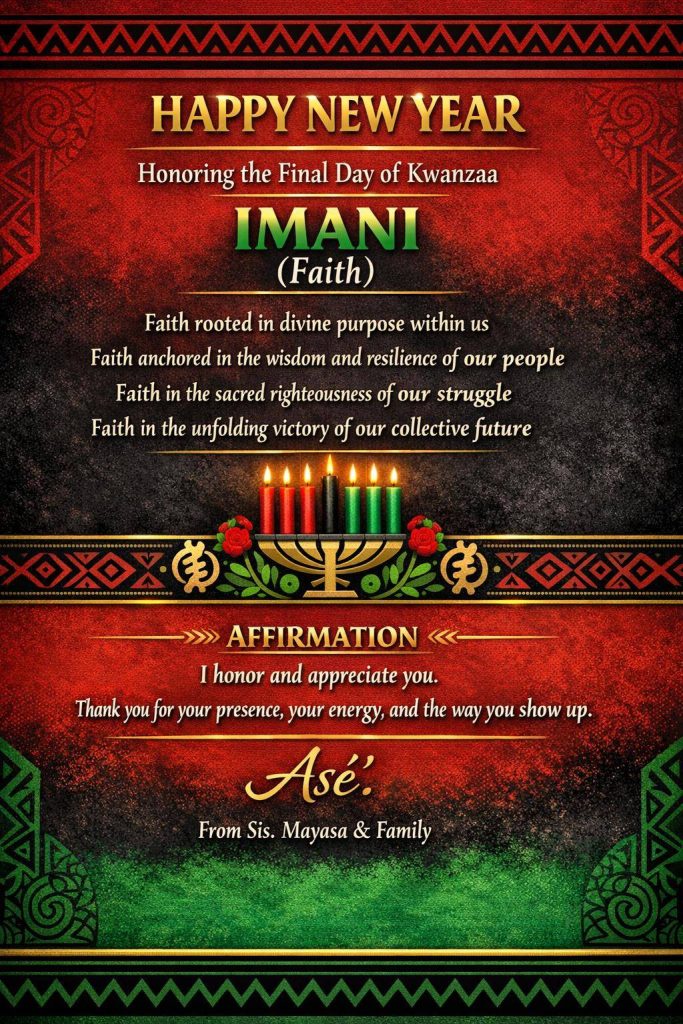
- Celebrated December 26 – January 1
- A cultural holiday, not a religious one
- Observed mainly in the United States, with some celebration elsewhere in the African diaspora
- Centered on the Nguzo Saba (Seven Principles):
- Umoja – Unity
- Kujichagulia – Self-determination
- Ujima – Collective work and responsibility
- Ujamaa – Cooperative economics
- Nia – Purpose
- Kuumba – Creativity
- Imani – Faith
What Kwanzaa is not
- Not an ancient African holiday (it draws inspiration from multiple African harvest traditions)
- Not a replacement for Christmas (many people celebrate both)
- Not universally celebrated by all Black Americans
Is it widely practiced?
- Participation peaked in the 1970s–1990s
- Today, some families celebrate it deeply, others casually, and many not at all
- It still appears in schools, community centers, museums, and cultural organizations
Why some people question it
- It was intentionally created (not organically ancient)
- Political and ideological debates around its founder
- Cultural shifts and generational differences
Bottom line:
Kwanzaa is a real, intentional, culturally based holiday. Whether it feels meaningful depends on the person—but it absolutely exists and continues to be practiced by many.